Imperial Tombs of the Ming and Qing Dynasties
Introduction
The imperial tombs of the Ming and Qing dynasties are a distinguished set of burial sites constructed between 1368 and 1915, which serve as a testament to the architectural brilliance and cultural significance of China during these periods. Strategically distributed across several provinces, including Beijing, Hebei, Liaoning, Anhui, Jiangsu and Hubei, these sites were carefully selected based on the principles of geomancy, or feng shui, to harmonize with natural landscapes. Featuring traditional Chinese architectural designs and decorations, the tombs represent some of the most significant constructions of their time, often built under the direct supervision of the emperors themselves.
These tombs not only reflect the highest architectural standards of the Ming and Qing dynasties but also encapsulate the philosophical and cultural beliefs of Chinese feudal society. The Xianling Tombs of the Ming Dynasty and the Eastern and Western Qing Tombs were inscribed on the World Heritage List in 2000; the Xiaoling Tomb of the Ming Dynasty and the Ming tombs in Beijing added to the inscription in 2003, and the Three Imperial Tombs of Shenyang, Liaoning province (Yongling Tomb, Fuling Tomb, and Zhaoling Tomb, all of the Qing Dynasty) added in 2004. These imperial mausoleums are characterized by their oblong shapes, grand entrances, and the presence of symbolic sculptures, such as stone figures and animal guardians, embodying the customs and ceremonial practices of the period.
History
The history of the these tombs stretches back to the reigns of two significant Chinese dynasties, which spanned from 1368 to 1911. The Ming Dynasty (1368-1644) was the first to establish these grandiose burial sites, with the tombs designed to reflect the belief systems, moral values, and cosmology prevalent in feudal Chinese society. The construction of these tombs was an elaborate affair, often involving the personal oversight of the ruling emperors to ensure adherence to the highest standards of craftsmanship and cultural symbolism. Each tomb was meticulously planned, with sites chosen according to geomantic principles, which emphasized harmony with the natural environment.
During the Qing Dynasty (1644-1911), the tradition of building elaborate imperial tombs continued, with significant sites constructed in various provinces. The Western Qing Tombs, for instance, began construction in 1730 and are among the most complete preserved ancient royal mausoleums in China. They serve as the final resting place for several Qing emperors, including the Yongzheng, Jiaqing, Daoguang, and Guangxu emperors. The history of these tombs is not just a reflection of the emperors' desire for a grand burial site but also an embodiment of the architectural and aesthetic values of their times.
Over the centuries, the tombs have borne witness to numerous historical events and changes, yet many remain well-preserved, offering invaluable insights into the architectural, cultural, and historical contexts of China's imperial past.
Architecture
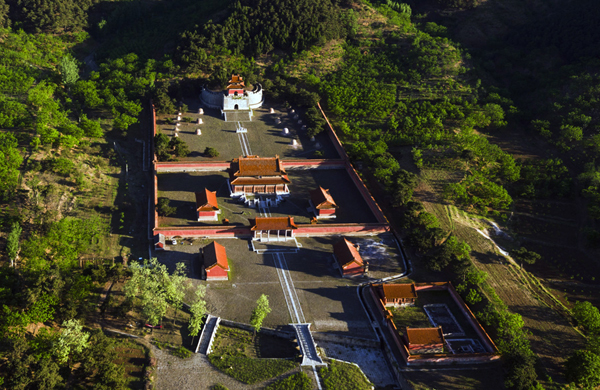
The architecture of the these tombs is a showcase of traditional Chinese design principles, with a strong emphasis on geomancy, or feng shui. The tombs are typically set within expansive, natural landscapes, carefully integrated into their surroundings to achieve harmony with the natural environment. The structures are often characterized by their oblong shapes, surrounded by red walls and capped with yellow tiles, a color reserved for imperial use.
A notable architectural feature of these tombs is their grand entrances, often marked by a large symbolic gateway, the largest of which in ancient China stands at a height of 14 meters and a width of 29 meters. The approach to the tombs is traditionally lined with stone figures, including 24 animal figures and several human ones, representing civil and military officials. These sculptures serve both a protective and ceremonial role, reflecting the spiritual beliefs and practices of the period.
The Ming and Qing tombs exemplify the pinnacle of traditional Chinese architectural design, with elements such as the "sacred way," a long entrance avenue lined with statues, and the underground burial chambers, which served as the final resting place for the emperors and their consorts. The tombs' architecture also reflects a blend of functionality and symbolism, designed to provide a suitable setting for the elaborate burial and memorial ceremonies that were an essential part of imperial protocol.
Cultural Significance
The imperial tombs of the Ming and Qing dynasties hold profound cultural significance as they embody the beliefs, values, and worldviews of Chinese feudal society across several centuries. These tombs serve as a physical manifestation of the philosophical and spiritual beliefs of the time, particularly concerning concepts of life, death, and the afterlife. The elaborate ceremonial practices associated with these tombs, including the regular sacrificial ceremonies performed by emperors and officials, underscore their importance in maintaining the spiritual and cultural continuity of the imperial lineage.
Moreover, the tombs are a testament to the highly developed architectural and artistic skills present during the Ming and Qing dynasties. They illustrate the refinement of traditional Chinese design and building techniques, providing insight into the aesthetic values and technological advancements of the era. As World Heritage Sites, these tombs are recognized not only for their outstanding architecture but also as cultural landmarks that offer a window into the historical and cultural development of China.
The tombs also play a significant role in contemporary cultural heritage, serving as a link between the past and the present. They continue to be sites of cultural and academic interest, attracting scholars, historians, and tourists who seek to understand the rich tapestry of China's imperial history.
Conservation and Preservation
Conservation and preservation efforts for these tombs are crucial to maintaining their historical and cultural integrity. Given their status as World Heritage Sites, these tombs are subject to stringent preservation protocols aimed at protecting their architectural and artistic elements from deterioration and damage. Conservation efforts include regular maintenance of the structures, careful monitoring of environmental factors that may affect their condition, and restoration projects designed to preserve their original features.
In recent years, there has been a concerted effort to balance the needs of preservation with those of public access and tourism. This involves the implementation of measures to manage visitor numbers and minimize the impact of tourism on the sites' physical integrity. Additionally, local governments have initiated development plans to enhance the surrounding areas, aiming to improve infrastructure while ensuring the tombs' ecological and cultural sustainability.








